GHK-Cu
Also known as: copper tripeptide-1 · glycyl-L-histidyl-L-lysine copper
A complex of the tripeptide glycyl-histidyl-lysine with copper(II). Classified here as a metal–peptide complex rather than a peptide, because the copper ion is integral to the species and to its reported chemistry.
Development status: Laboratory research reagent
Identifiers and molecular characteristics
- CAS number
- Not verified
- Molecular formula
- Not verified
- Molecular mass
- Not verified
- Amino-acid sequence
- Not verified
- PubChem CID
- Not verified
Identifiers are published only with a source and a check date. Fields marked “not verified” have not yet been confirmed against a primary source — we show the gap rather than an unchecked figure. Always confirm against the certificate of analysis for the specific lot you hold.
Biological targets
- Copper transport and copper-dependent enzymes
- Extracellular matrix signalling in fibroblast models
Mechanism of action
GHK binds copper(II) with high affinity. Reported activity in fibroblast culture includes effects on collagen and glycosaminoglycan synthesis. Because copper is a cofactor for enzymes including lysyl oxidase, separating peptide-specific effects from general copper delivery is a recurring methodological difficulty in this literature.
Research evidence and its limits
Substantial in-vitro work in fibroblast and keratinocyte culture, and widespread use as a cosmetic ingredient. Controlled human studies with robust endpoints are considerably less common than the volume of marketing material implies.
Safety considerations
Used widely in topical cosmetic formulation. Copper complexes warrant handling care as laboratory materials. Supplied and discussed here strictly as a laboratory research material. Not a medicine, not for human or veterinary administration, and nothing on this page should be read as a dosing, treatment or safety recommendation.
Analytical identification and quality testing
The copper complex and the free peptide are distinguishable by UV-visible absorbance — the complex has a characteristic d-d transition — as well as by mass spectrometry. A certificate describing only the tripeptide is not evidence that the copper complex was supplied.
Regulatory status
Used as a cosmetic ingredient in many jurisdictions under ingredient nomenclature such as copper tripeptide-1. Cosmetic ingredient status is not medicinal approval.
Frequently asked questions
Why is GHK-Cu not classified as a peptide on this site?
Because the copper ion is part of the species, not an impurity. Calling it simply a peptide hides the chemistry that most of its reported activity depends on.
References
- PubMed — search GHK-Cureview
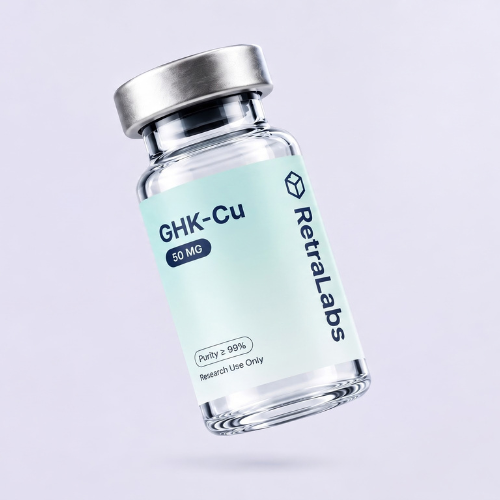
Available from RetraLabs
GHK-Cu
50 MG · 99.1% · supplied for laboratory research use only.
View product detailsRelated compounds
Entry last reviewed 2026-10-11. Regulatory status and scientific understanding change; verify against primary sources before relying on anything here.