Kisspeptin-10
Also known as: KP-10 · metastin fragment
The C-terminal decapeptide of kisspeptin, the ligand for the KISS1R receptor and an upstream regulator of GnRH release.
Development status: Investigational — studied in human trials
Identifiers and molecular characteristics
- CAS number
- Not verified
- Molecular formula
- Not verified
- Molecular mass
- Not verified
- Amino-acid sequence
- Not verified
- PubChem CID
- Not verified
Identifiers are published only with a source and a check date. Fields marked “not verified” have not yet been confirmed against a primary source — we show the gap rather than an unchecked figure. Always confirm against the certificate of analysis for the specific lot you hold.
Biological targets
- KISS1R (GPR54)
Mechanism of action
Kisspeptin signalling at KISS1R on GnRH neurons is a gatekeeper of the reproductive axis. Loss-of-function mutations in this pathway cause hypogonadotropic hypogonadism in humans, which is unusually direct evidence of its physiological role.
Research evidence and its limits
Human physiology studies and registered clinical research, principally in reproductive endocrinology.
Safety considerations
No regulatory authority has assessed this compound as safe or effective for any human indication. The published record is predominantly laboratory and animal work, which does not establish human safety. Supplied and discussed here strictly as a laboratory research material. Not a medicine, not for human or veterinary administration, and nothing on this page should be read as a dosing, treatment or safety recommendation.
Analytical identification and quality testing
Identity by high-resolution mass spectrometry against the expected mass, purity by RP-HPLC with UV detection. Tandem MS sequencing or peptide mapping gives stronger identity evidence than mass alone.
Regulatory status
Not an approved medicine. Used in clinical research settings.
Frequently asked questions
Why is kisspeptin considered so central to reproduction?
Because human genetics established it directly: inactivating mutations in KISS1R cause failure of pubertal development. That is stronger evidence of physiological necessity than most peptides in this encyclopedia can claim.
References
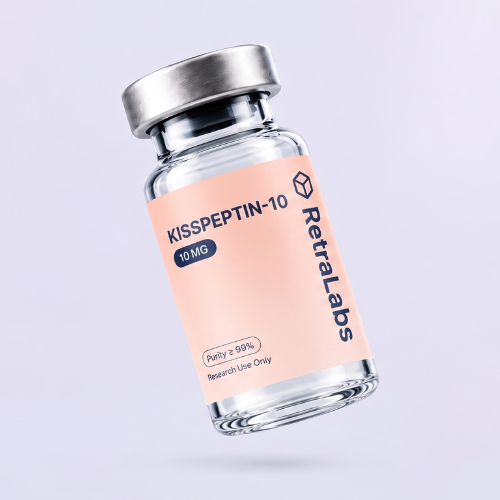
Available from RetraLabs
Kisspeptin-10
10 MG · 99.1% · supplied for laboratory research use only.
View product detailsRelated compounds
Entry last reviewed 2026-10-11. Regulatory status and scientific understanding change; verify against primary sources before relying on anything here.